Here is an outline of some of the things we can cover in lessons, it’s not a course that everybody follows from beginning to end because individual tuition should be flexible, so we’ll concentrate on the areas that are most useful to you and your playing.
Think of this as a map of the territory rather than a compulsory itinerary.
The basics
If you’re a beginner, this is where we’ll start: basic chords, simple riffs, strumming, picking, rhythm and some straightforward songs.
The aim isn’t simply to accumulate chords and shapes, from the beginning we’ll work on playing cleanly and rhythmically, developing good physical habits and understanding what you’re actually doing.
Blues
The blues is enormously important because its influence runs through so much modern guitar music, so we’ll look at the blues scale across the fretboard, phrasing, bends, cliché riffs and the shared vocabulary that allows musicians to communicate with one another.
We’ll also study the 12-bar blues and its variations, learning how to provide both rhythm and lead without merely surviving the chord changes, the aim is to give you choices and allow you to contribute creatively.
For more advanced players, we can investigate the interaction between major and minor, major pentatonic sounds, target tones, the tritone and the styles of individual blues players, ultimately the idea is to escape from the prison of fixed scale shapes and play the notes you actually want to hear.
Funk and soul
This is all about taste, dexterity and rhythmic freedom, guitarists spend a great deal of their time playing rhythm so being able to take a simple chord progression and turn it into something special is an essential skill.
We’ll pull apart funk, soul and Motown-style guitar parts to investigate groove, chord voicings, rhythmic fills, major pentatonic ideas, thirds and sixths, muting and tight controlled strumming.
A particularly important skill is the ability to start with an empty bar and add only what the music needs. Playing more isn’t necessarily playing better.
Rock and metal
Here we can take many of the ideas developed through blues and apply rather more horsepower, we’ll work on speed, accuracy and movement around the fretboard, including position shifts, single-string playing, legato, alternate picking, sweep picking, tapping, bends and other techniques where appropriate.
For rhythm we’ll look at power chords, inversions, riffs, pedal tones and ways of combining chords with single-note lines to create more interesting parts.
We’ll also look at where modern rock and metal came from. Music doesn’t appear from nowhere: understanding the route from blues through bands such as Led Zeppelin and Deep Purple, into the NWOBHM and subsequent styles gives you a much clearer idea of why the music works as it does.
Music theory — without memorising a chord dictionary
I can offer you just short of a legally binding guarantee that we won’t spend lessons poring over dusty manuscripts or trying to memorise enormous books containing hundreds of chord and scale diagrams, I’d much rather show you how to write the book yourself.
We’ll start with fundamentals such as the chromatic and major scales and use those to understand intervals, keys, chord construction and the chords that naturally occur within a key.
From there we can investigate modes, modal harmony, non-diatonic chords, chord extensions and other scales as they become musically useful.
The important thing is understanding why things work, once you understand the principles, an enormous amount of apparently unrelated musical information begins to organise itself.
Organising the fretboard
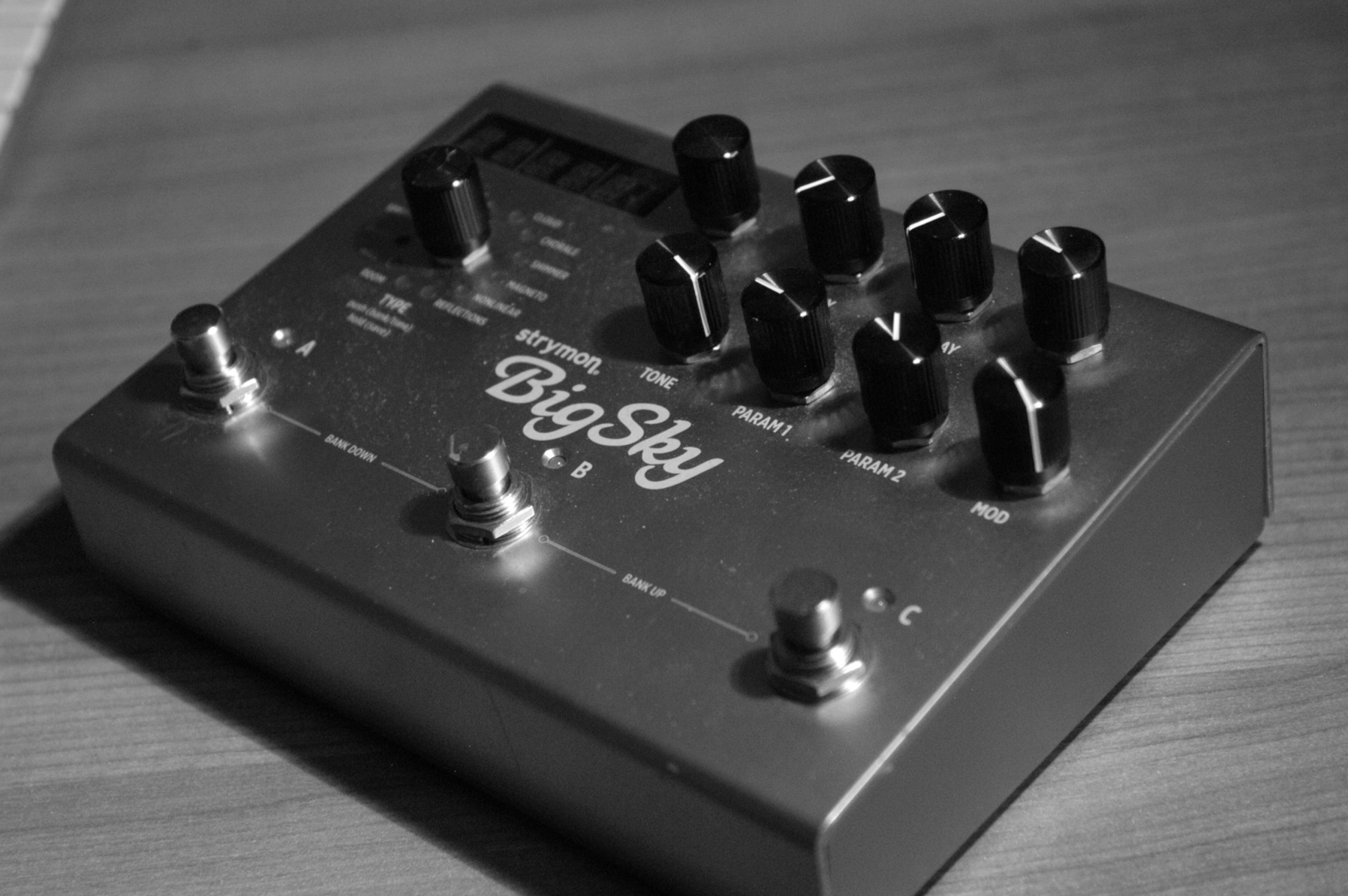
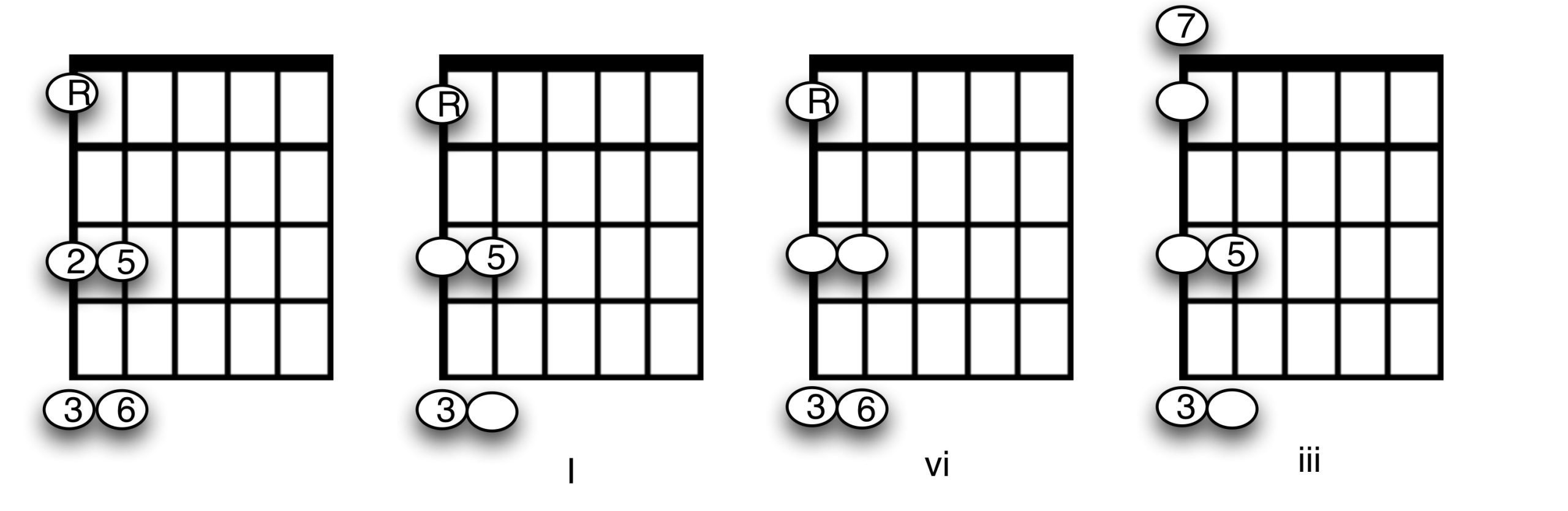
This is where we develop a system for organising information across the guitar using familiar chord structures and the CAGED system.
Chords, scales and arpeggios aren’t separate collections of diagrams, they’re interconnected views of the same fretboard and so the aim is to understand those relationships well enough that you can work out unfamiliar chords and scales for yourself rather than constantly having to look them up.
Ear training
Connecting your ear to the fretboard is vital, if you can’t eventually play what you hear, you’re really engaged in fretboard aerobics rather than making music.
We’ll work on recognising intervals and familiar chord movements and connecting those sounds with physical locations on the guitar.
The long-term aim is that when you hear something — either on a record or in your imagination — you have a much better idea of what it is and where to find it.
Focused practice
This may be the most important subject of all.
Knowing how to practise can make an enormous difference, simply spending an hour with a guitar in your hands doesn’t necessarily mean you’ve practised effectively for an hour, we’ll look at ways of isolating problems, removing unnecessary choices, using rhythm and backing tracks, establishing consistent movements and repeating the thing you actually want to learn rather than accidentally practising several competing versions of it.
With limited practice time available to most adults, the objective is to get as much useful progress as possible from the time you have.
Your physical relationship with the guitar
Good players often appear to be completely at ease with their instrument, this doesn’t happen by accident, we’ll look at things such as how you hold the guitar and pick, hand position, fretting pressure, muting unwanted strings and economical movement. Small physical improvements can sometimes solve problems that people have spent years trying to overcome simply by practising harder.
Analysis and integration
A good teacher should eventually make himself redundant, my aim is to give you enough understanding that you can hear a new piece of music, relate it to things you’ve encountered before and start making sensible musical decisions for yourself and this is where theory, ear training, fretboard knowledge, technique and experience stop being separate subjects and begin working together.
Recording yourself
This is a horror I particularly like to inflict on students regularly, it’s my hypothesis that while you’re actually playing, a large proportion of your attention is occupied by the physical business of playing the guitar leaving little cognitive bandwidth for critical examination of how you sound. Listening back to a recording removes that demand and lets you hear your performance much more critically.
Recording is particularly useful for rhythm, timing, dynamics, tone and understanding how your guitar part fits into the overall sound rather than simply ramming your latest riff across the track.
We can also investigate layering guitar parts and breaking chords into different textures to create more interesting arrangements.
Creative use of effects and technology
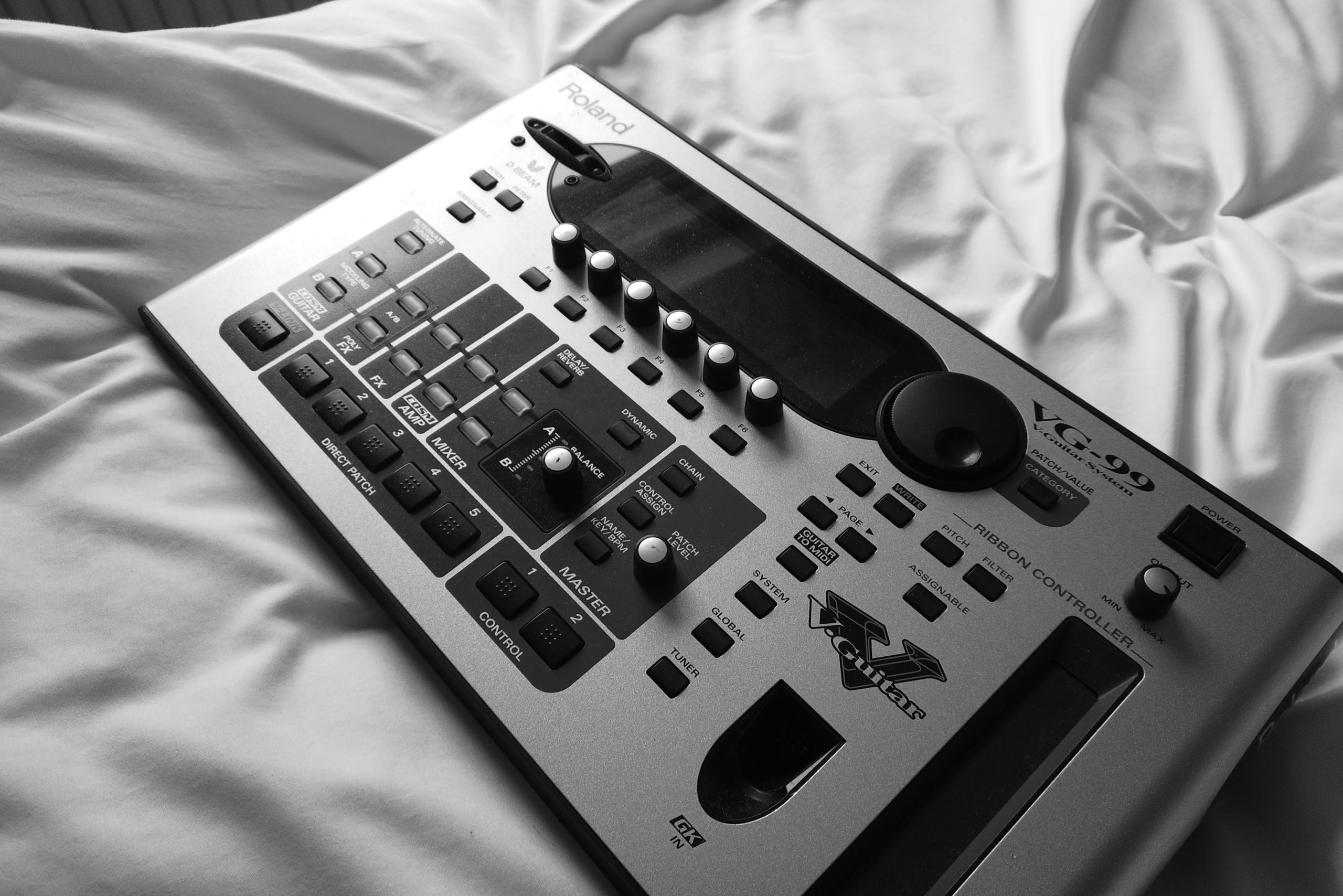
Effects aren’t just there to make impressive noises in guitar shops, we can look at using effects creatively and subtly, building sounds that actually work within a piece of music rather than simply sounding impressive on their own.
Recording software, backing tracks and other technology can also be incorporated into lessons where they’re useful, recording yourself in particular can completely change the way you practise and listen to your own playing.
How it all fits together
I’ve separated these subjects here to make the syllabus understandable, in actual lessons we won’t march through them one at a time because they overlap constantly. A song might lead us into rhythm, which exposes a technique problem, which leads to some focused practice, which reveals an interval, which takes us into theory and ear training.
That’s exactly how it should work.
Eventually all these apparently separate subjects should begin to meld into one thing: playing music.
“I’d rather be dead than singing ‘Satisfaction’ when I’m forty-five.”
Mick Jagger