I don’t believe learning guitar should mean memorising hundreds of disconnected chord, scale and fretboard diagrams, my aim is to help you understand how music works on the guitar, so that what you hear, what you see on the fretboard and what your fingers do all become connected.
Learning music from the inside out
A lot of guitar teaching works from the outside in: learn this shape, remember this pattern, play these notes which can get you playing quite quickly, but it can also leave you with a collection of things you’ve memorised without really understanding how they fit together.
I prefer to work from the inside out.
That means understanding the musical relationships behind the shapes: intervals, chords, scales, rhythm and harmony, and gradually seeing how they form one connected system across the fretboard.
The point isn’t to turn every guitarist into a music theorist, it’s to make the theory useful because if you understand why something works, you’re much better equipped to move it, change it, improvise with it and use it in your own music.
Learning to play what you hear
One of the most important connections is between your ear and the guitar so rather than treating the fretboard as a collection of numbered frets and memorised patterns, I want you gradually to recognise the sounds you’re hearing and understand where they live on the instrument, that might mean recognising an interval, hearing where a chord wants to move, working out a riff without immediately reaching for TAB, or eventually being able to play something that’s in your head.
This develops gradually, but it’s one of the things that turns the guitar from an instrument you’re operating into an instrument you’re actually using to make music.
Practice efficiency
Simply spending more time with a guitar in your hands doesn’t necessarily mean you’re practising effectively, if you repeatedly play something slightly differently — changing the fingering, picking, timing or position each time — you’re effectively practising several different versions of the same thing. The correct version then has to compete with all the others.
I put a lot of emphasis on identifying exactly what you’re trying to learn, finding an efficient way of doing it and then repeating that consistently.
Where possible, practice should also happen in a musical context, a drum beat, backing track or other rhythmic reference is usually far more useful than endlessly playing exercises in isolation. The aim isn’t necessarily to practise more, it’s to get more from the practice time you already have.
Lessons are built around the individual
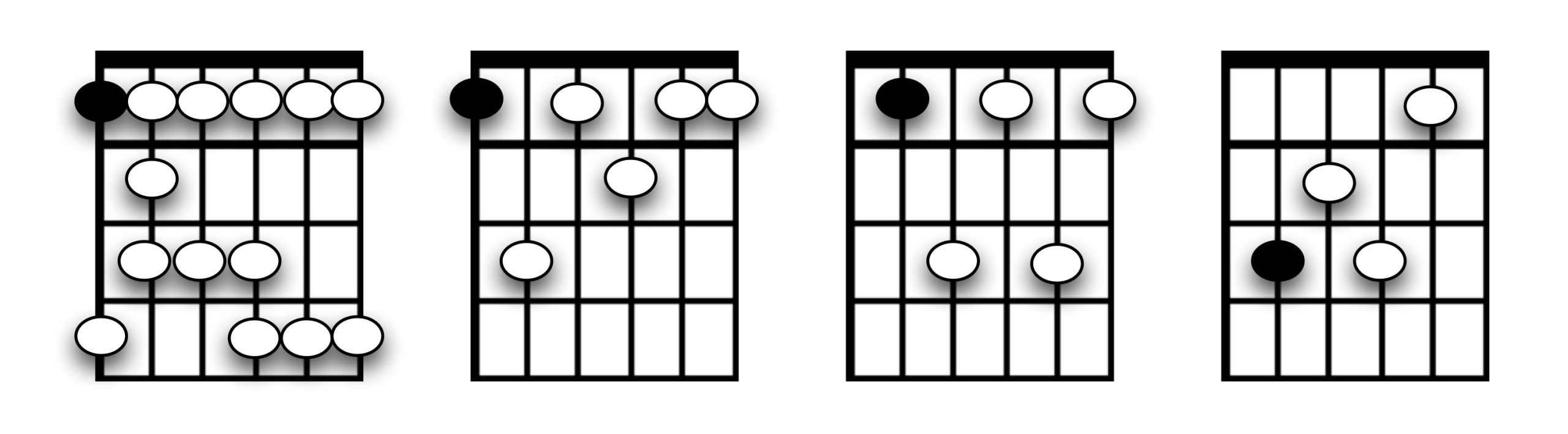
There isn’t a single course that every student follows from beginning to end, different players arrive with different musical tastes, experience, strengths, weaknesses and ambitions. One person might want to improvise confidently over a blues; another might want to understand the fretboard; another might need to improve rhythm, technique or learn how to construct their own guitar parts.
So although there are fundamental musical ideas that come up repeatedly, the route through them is shaped around the individual.
Songs are particularly useful because they give us a real musical reason to investigate technique, rhythm, chords, scales, harmony or theory rather than studying those subjects simply because they’re on a syllabus.
Understanding rather than memorising
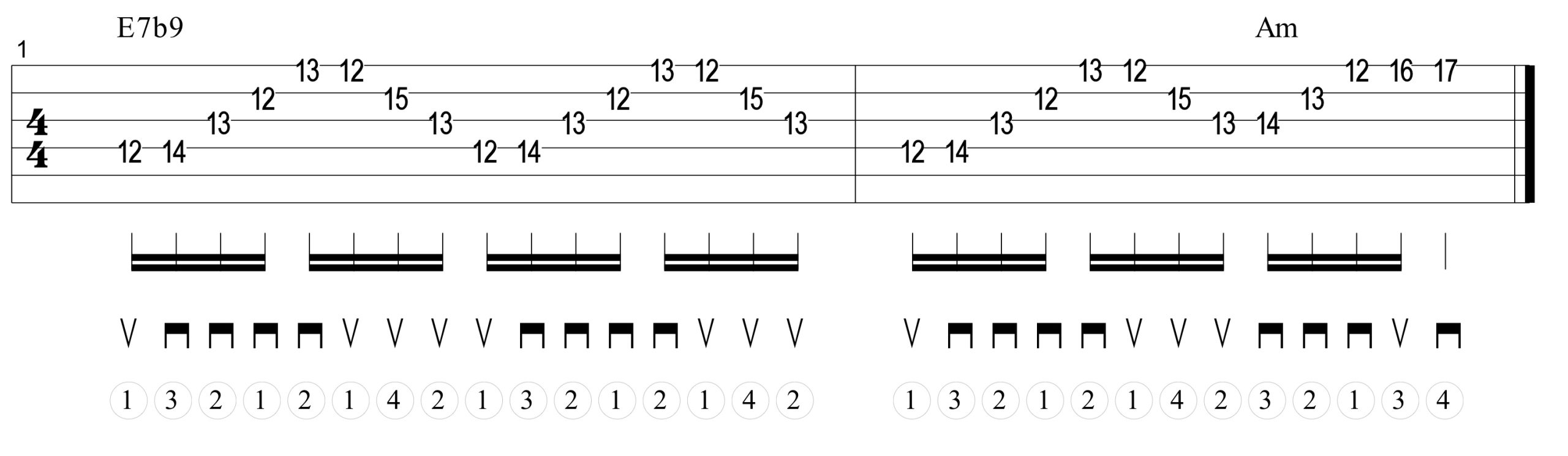
My aim is eventually to make you less dependent on me, not more, if every new chord, scale or musical situation requires another diagram or another lesson, something is missing. The more you understand the underlying system, the more you should be able to work things out for yourself.
That doesn’t mean there’s nothing to memorise — obviously there is, but whenever possible, I’d rather give you a way of deriving the answer than another isolated fact to remember.
Over time, the various pieces should begin joining together until the fretboard stops looking like six strings covered in unrelated shapes and starts looking like one musical system.
Remembering what happened in the lesson
A lot can happen during an hour’s lesson, and it’s very easy to understand something perfectly at the time and then wonder two days later exactly what we did so for that reason, lessons are recorded so you can go back and revisit anything we covered. I also provide a PDF lesson summary afterwards, setting out the main things we worked on and what to concentrate on before the next lesson which means that the lesson doesn’t disappear as soon as you walk out of the room or close Zoom, you have a record of it and a clear starting point for the week’s practice.
The overall aim
Ultimately, I want you to understand the guitar well enough that you can concentrate less on where your fingers are supposed to go and more on what you want the music to do, technique, theory, fretboard knowledge and ear training aren’t separate subjects, they’re different parts of the same job: giving you the freedom to hear an idea and turn it into music.
‘There are two means of refuge from the miseries of life: Music and cats’.
-Albert Schweitzer.